Showing posts with label Credit Repair Advice. Show all posts

Friday, May 6, 2022

May Newsletter 2022

 Wishing all the wonderful mothers out there a Happy Mother's Day!

Happy Mother's Day!


Don't let bad credit be a barrier for home buying

Home prices have skyrocketed by nearly 20% over the last year and mortgage rates have risen faster over the past three months than they have in decades. But the high cost to buy a home is not the only obstacle prospective buyers are facing.

Other hurdles include a lack of available homes for sale that fit the buyer's criteria, bidding wars, and failing to have enough money for a down payment, according to a new study from the National Association of Realtors and Morning Consult.

"Record-high home prices and record-low inventory have made the home buying process exceedingly difficult," said Jessica Lautz, NAR's vice president of demographics and behavioral insights. "Our study shows that, while the inventory crisis is affecting potential buyers of every race, nearly all home buyers agree that homeownership is still an important part of the American Dream."

Read the full CNN article here.


These are REAL results!
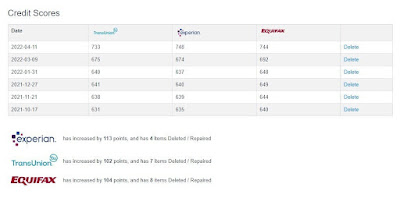

In just a few short months we've gotten our client's credit from low 630's to 730's. That's over 100 points in 6 months! When shopping for a home, a credit score shouldn't be the reason one can't buy a home, especially with the right preparations and tools.

You too can improve your creditworthiness.


Are you mortgage ready?

Are you mortgage-ready? Do you know what your credit score is? Are you a first-time home buyer?

Using our credit repair services prior to contacting a loan officer can ensure the home buying process goes smoothly and painlessly. Even if you do have decent credit, having an even better credit score can increase your chances of better rates. Call us on (804) 823-9601 or (800) 648-5157 today for more information!


5 Star Reviews

"163 points in just two months"
These results speak for themselves!

Credit
 Restoration is the truth! Robert and his team know what they're doing!!!! Trust the process and you will see things happen. They update you once a month on your progress. My husband's scores have jumped 163 pts in 2 months. Their customer service and team are always friendly, and willing to answer any questions you may have. Just like the other gentlemen stated, this jump put us back in the mortgage approval range. The monthly payments are a small investment on a huge return!! Thank You Credit Restoration!!!!!!


– S. Ford


A Message from Federal Student Aid


"In response to the COVID-19 emergency, we paused loan payments and set interest rates to 0% for eligible federal student loans. On this page, you can find out if your loans are eligible and how this relief affects your loans."

Read the full announcement here
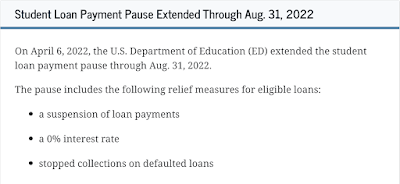
Student loan payment pause


Contact Us

Give us a call today to start your credit repair journey!
Mon-Fri 9 a.m. - 5 p.m. (804) 823-9601 | (800) 648-5157


Monday, September 24, 2018

Credit Report Security Freezes Are Now FREE

WASHINGTON, D.C. — The Federal Trade Commission (FTC) issued a reminder that, starting today, consumers who are concerned about identity theft or data breaches can freeze their credit and place one-year fraud alerts for free.

 Credit Repair Security Freeze

Under the new Economic Growth, Regulatory Relief, and Consumer Protection Act, consumers in some states — those who previously had to pay fees to freeze their credit — will no longer have to do so. The new law also allows parents to freeze for free the credit of their children who are under 16, while guardians, conservators, and those with a valid power of attorney can get a free freeze for their dependents.
In addition, the new law extends the duration of a fraud alert on a consumer’s credit report from 90 days to one year. A fraud alert requires businesses that check a consumer’s credit to get the consumer’s approval before opening a new account.
As part of its work to implement the new law, the Federal Trade Commission has updated its IdentityTheft.gov website with credit bureau contact information, making it easier for consumers to take advantage of the new provisions outlined in the law.
To place a credit freeze on their accounts, consumers will need to contact all three nationwide credit bureaus: Equifax, Experian, and TransUnion. Whether consumers ask for a freeze online or by phone, the credit bureau must put the freeze in place within one business day. When consumers request to lift the freeze by phone or online, the credit bureaus must take that action within one hour. If the request is made by mail, the agency must place or lift the freeze within three business days.
To place a fraud alert, consumers need only contact one of the three credit bureaus, which will notify the other two bureaus, according to the FTC.
“Credit freezes and fraud alerts are two important steps consumers can take to help prevent identity theft,” the regulator stated on its website. “Identity theft was the second biggest category of consumer complaints reported to the FTC in 2017 — making up nearly 14 percent of all the consumer complaints filed last year. Consumers who believe they have been the victim of identity theft can report it and receive a personalized recovery plan at IdentityTheft.gov.”

Visit the Credit Restoration Associates Website 

See Company President Robert Linkonis's latest TV interview on WRIC Channel 8: https://www.wric.com/news/politics/capitol-connection/va-sues-online-lender-alleges-illegal-predatory-loans/1160292086

Credit Repair Franchise Opportunityhttps://www.crafranchise.com

CRA Resources:
Credit Repair:
About CRA:

Friday, December 8, 2017

Business Growth Workshop "Raising Capital For Your Business"


They all turn out great, but this one is different than all of my previous events. The upcoming Business Growth Workshop is getting promoted by SKY4 in Hampton, so it is getting massive TV exposure. 

Also, we look forward to our new segment: "Money Mondays" which will be shown once an hour on SKY4 - On Monday's of course! Tune in or view from their website:  https://www.sky4tv.com/  

Check the CRA Facebook Page on Monday for pictures of this event. www.Facebook.com/Financed1


Related:
Robert's Next Presentation for the SBA and SCORE Richmond

How Student Loan Debt Factors Into your Credit Score:


Visit the Credit Restoration Associates Website  
Back to the CRA blog homepage:Credit Repair Va:
CRA Resources:
Credit Repair:
About CRA:

Thursday, January 21, 2016

FTC calls Sprint on $2.9 million risk-based pricing violation

By: Lesley Fair

Two people walk into a deli and both order a pastrami on rye. When the check arrives, one is charged $8. The other is surprised to get a bill for $15.99.

That’s not the start of an old Henny Youngman joke. It’s an analogy that raises some of the issues in the FTC’s proposed $2.95 million settlement with Sprint for allegedly charging customers with lower credit scores a monthly fee without giving them the proper up-front notice required by law.

The FTC’s lawsuit centers on mobile service provider Sprint’s Account Spending Limit Program. Under the program, consumers with lower credit scores were charged a monthly fee of $7.99 on top of what they already had to pay for cell phone and data service. But here’s the thing: Many consumers didn’t know they had been “enrolled” in the program and weren’t given mandatory information that would have made it possible for them to do meaningful comparison-shopping before they were locked in. The FTC says that by tacking that extra $7.99 fee onto consumers' monthly bills without making required disclosures, Sprint violated the Fair Credit Reporting Act and its Risk-Based Pricing Rule.


Because Sprint bills consumers for services after the fact, the company is covered by the Risk-Based Pricing Rule. Under the Rule, if consumers are offered service on less favorable terms based on their credit report or credit score, the company has to inform them of that fact by giving them what the Rule calls a risk-based pricing notice.

But according to the complaint, in many cases Sprint failed to provide customers it placed in its Account Spending Limit Program with all of the required disclosures. The FTC says Sprint’s notices omitted key information necessary for consumers to determine if their lower credit scores were based on errors in their consumer reports. That’s a particularly important consideration, given FTC studies showing that credit reports often contain mistakes that can have a major impact on what people have to pay for things like cell phone service.

Sprint's timing raised concerns, too. The complaint alleges that Sprint often gave consumers the required notices too late for them to shop around for a better deal without having to cough up a hefty early termination fee.

In addition to a $2.95 million civil penalty, the proposed settlement requires Sprint to comply with the Risk-Based Pricing Rule. But that’s not all. From here on in, Sprint will have to give customers the required notice – this time, with complete information – within five days of signing up for Sprint service or by a date that gives them the ability to avoid recurring charges like those in the Account Spending Limit program. Sprint also has to send corrected risk-based pricing notices to consumers who received incomplete notices from the company.

Do your company’s practices put you at risk for a Risk-Based Pricing Rule violation? One important compliance tip: Make sure your notices give consumers all the information required by law. Read Using Consumer Reports for Credit Decisions: What to Know About Adverse Action and Risk-Based Pricing Notices for guidance.


NEXT POST: Trending Data - The New Way that the Credit Bureaus Rate You.

The History of FICO

Visit the Credit Restoration Associates Website
Back to the CRA blog homepage:
Credit Repair Va:
Credit Repair Resources:
Credit Repair:

Saturday, October 3, 2015

T-Mobile is Victim of Breach by Experian - 15 million Clients Information Compromised

SAN FRANCISCO — A hacker has acquired the records of 15 million T-Mobile customers and people who had applied for credit, the company reported Thursday.
The breach, which affected two years worth of records,occurred at Experian, the vendor that processes T-Mobile's credit applications, T-Mobile  CEO John Legere said in a post on the site.
Experian North America said in a notice that one of its business units was compromised, but that its consumer credit bureau was not affected.
Experian has notified both U.S. and international law enforcement. Experian North America's parent company, Experian is headquartered in Dublin, Ireland.
"The investigation is ongoing, but what we know right now is that the hacker acquired the records of approximately 15 million people, including new applicants requiring a credit check for service or device financing from September 1, 2013 through September 16, 2015," Legere wrote.
"The data set was for applicants and customers of T-Mobile who applied for service over that two year period," said Experian spokeswoman Susan Henson.
The breach happened approximately two weeks ago. It "was discovered within two days, secured immediately, comprehensive forensic investigation launched (and still continuing) and we announced it today to quickly notify consumers. Our notification to state attorneys’ general happens tomorrow," Henseon said.
In a refreshing change from the corporate-speak often used by CEOs whose businesses are breached, T-Mobile's Legere stayed true to form with his directness.
"Obviously I am incredibly angry about this data breach," he said, saying he would conduct a "thorough review" of his company's relationship with Experian but that his top concern for now was "assisting any and all consumers affected."
The compromised information includes customers' names, addresses and birth dates as well as encrypted fields with Social Security number and ID number, which could be a driver’s license or passport number.
Experian told T-Mobile the encryption protecting those numbers may have been compromised, Legere said.
Experian and T-Mobile have set up two years of free credit monitoring and identity resolution services for compromised customers. Ironically, the service is being offered through Experian's own credit monitoring service.
Experian cautioned consumers that under no circumstances would either Experian or T-Mobile call them or send them messages asking for personal information in connection with the breach.
"You may go to the website, but you should not provide personal information to anyone who calls you or sends you a message about this incident," Experian said in a statement.
Get your 2 years of credit monitoring from Experian here: http://www.protectmyid.com/default.aspx?sc=678628

Next Post: 7 Secrets To Get a PERFECT Credit Score: http://creditra.blogspot.com/2015/10/7-secrets-on-how-to-get-perfect-credit.html


Thursday, September 24, 2015

Add up to Two Years of Past Rent Payments to Your Credit Report

We have been waiting for this!

Details about the Program:

Rental Kharma will first verify your rental lease with your property manager. After verification, they will report up to the past 24 months of history to Transunion. (They are working to add Equifax and Experian).

It will report as an "Open Tradeline". If you have more than one lease or have co-signed for someone else, it will report as a "Joint" tradeline. You can have more than one tradeline added if your name is on multiple leases.

Every month, Rental Kharma will report the previous months rental payment - building your credit!

How long until the tradeline reports? Rent Data is sent to Transunion Twice a Week. Most rental payments will reflect in under 7 days.

This is an incredible value and I am excited that our clients have the opportunity to take advantage of it. Sign up HERE. 


Next Post: Their Debt Collection Days are OVER!


Friday, August 21, 2015

Why There's No Such Thing As Too Many Credit Cards...


John Ulzheimer has 13 credit cards, but he's never paid a cent in interest, his credit score stays above 800, and he's never dug his way out of consumer debt.
That's because he knows exactly what he's doing.
Ulzheimer, credit expert at CreditSesame.com, has over 23 years of experience in the consumer credit industry and has even worked for credit bureau Equifax and for FICO, Fair Isaac Corporation.
"The initial strategy wasn't to just open a bunch of cards," he remembers, "but when I went to work for FICO, I realized that if you have a lot of cards, pay them all on time, and keep your balances low, you're actually benefiting from that." 
"A lot of people are critical of my example," he acknowledges. "But having a lot of cards is only a problem if you aren't responsible with them — if you let the cards control you."
Here, we've highlighted nine of the credit lessons to learn from Ulzheimer's experience. Even if you plan to stick with the three or four held by the average American consumer, see what you can glean:
1. Have a reason for opening each card. You should have a use in mind for every card before you apply. Ulzheimer only opens cards that have a purpose, like his Delta Reserve card. "I live in Atlanta and fly Delta all the time," he explains, "and the card earns Medallion miles, which allow me to do things like upgrade to first class and check bags for free. It makes my travel much more convenient and enjoyable."
2. Keep your cards open. Unless you're paying exorbitant fees, or find that you can't control yourself with too much credit, there's no reason to close your cards. While closing a card will not shorten your account history. It will decrease your total amount of credit available and therefore increase your credit utilization rate, which could have an adverse effect on your credit score. Ulzheimer's oldest card is from 1999.
3. Keep your cards active. "I don't use all 13 cards at the same time," explains Ulzheimer. "I rotate one or two into regular use to make sure they all get some activity, so the issuer doesn't proactively close them." Credit card companies want you to use their cards, so if you haven't touched yours in awhile, they can take it upon themselves to lower your balance or close the card altogether. They must notify you if they do, but why would you want to take that chance?
4. Be deliberate about which card you choose to use. On the recommendation of his accountant, Ulzheimer uses a business credit card for his professional expenses, a credit union card for small, everyday purchases like gas or dry cleaning, and his favorite rewards card — the Delta Reserve — for bigger purchases, like furniture or auto work. When he signed his son up for a summer of camps, he used three of the cards that have lain dormant for a few months.
5. Never spend money just to get rewards. "I call this chasing rewards, where you buy things or open cards you wouldn't normally to get the points," Ulzheimer says, noting that he uses his cards only to spend money he would anyway. "It's incredibly dangerous. Most people who find themselves in terrible credit card debt attribute it to using cards this way."
6. Get close with your account statements. Ulzheimer logs into his accounts every day — sometimes more than once. He doesn't find it difficult to keep track of them because he's familiar with exactly which cards he's using and how much he's spending. "I'm very engaged with my bank accounts," he says.
7. Be on top of your payments. Ulzheimer pays all of his credit card bills manually — no auto-pay for him — and makes a point of logging into his account and paying the balance even before the statement period closes and a bill is sent to him. "That way, I never carry a balance, and it doesn't show up on my credit report," he explains.
8. Space out your new accounts. There's no need to go out and get a dozen credit cards today. In fact, Ulzheimer advises against it. "Don't acquire a bunch of cards all at one time because the hard inquiries will destroy your credit score, and you probably won't be approved for all of them," he says. "This is a long-term strategy."
9. Use credit cards as they were intended. Credit cards aren't meant to let you spend money you don't have, and treating them that way is what gets too many of us in trouble. "You have to use credit cards for what they were designed for: convenient shopping," cautions Ulzheimer.

Read more: http://www.businessinsider.com/how-to-manage-many-credit-cards-2014-5#ixzz3jVY3zshr


*** Next Famous CRA Blog Post: The CFPB "SLAPS" JP Morgan Chase:  http://creditra.blogspot.com/2015/07/cfpb-47-states-and-dc-take-action.html


Friday, October 11, 2013

The Credit Bureaus "Rise to Power"


By Robert W Linkonis Sr.

The vast majority of Americans have to obtain a loan to purchase a new car or home. During this process, the lender will order a copy of one or all of your three credit reports to make either a lending or an adverse action decision to the request. The interest rate or fees that you will have to pay on these loans may be directly related to how you have handled your credit.   

Every one who has heard me speak over the years knows that I am big on handling credit "wisely". This means in part - maximizing your credit score by understanding the credit score. But - the credit score is computed based on data obtained by the three credit bureaus. How did the three credit bureaus rise to the level of power that they have to influence the lives of every one of us?


History of the Credit Bureaus

As far as back as the 1860s we can find traces of the origins of credit bureaus. Local merchants would share and maintain lists of individuals who were high credit risks. That allowed them to offer more credit to people who weren’t on the lists, whereas previously, most merchants only extended credit to people they knew personally.

Later on as populations became more mobile and a wider group of merchants across the country needed information to help determine the creditworthiness of individuals, credit bureaus as we know them today began to materialize. 

What Are the Three Credit Bureaus?

Over the years, as the number of people seeking credit grew, the ability to find consolidated credit reporting information took on added importance. Today, some 2 billion data points are entered every month into credit records in the U.S, and approximately 1 billion credit cards are actively being used in the U.S. That’s a lot of data!

There are literally thousands of small credit bureaus doing business today. Most are just resellers of data from the "Big Three": Equifax, Experian and Transunion Let’s take a brief look at their history.

 
History of Equifax

Equifax was founded way back in 1899 as the Retail Credit Company. They grew at a furious pace and had offices throughout North America by the 1920s. By the 1960s, they had credit information for millions of Americans on file, and weren’t afraid to share it with whoever wanted to pay them for it.

The passage of the Fair Credit Reporting Act of 1970 placed some limits on what information could be shared with who, as well as put laws in place to govern the credit industry and protect consumers. Retail Credit Company suffered a bit of an image problem, but by 1975 they had successfully re-branded as Equifax.


TransUnion

TransUnion was the second of the Big Three to come along. Founded in 1968 as the holding company of Union Tank Car, a rail transportation equipment company, TransUnion jumped into the credit sphere in 1969 when they began acquiring regional and major city credit bureaus. They’ve grown over the years to the point where they now have over 250 offices across the U.S., as well as in 24 other countries.


Experian

Experian is the latecomer to the Big Three. They were founded in 1980 in England as CCN Systems. They expanded to the United States in 1996 by acquiring a company called TRW Information Services. They’ve continued to grow their operations to 4 main geographic regions, employing 15,000 people working in 41 countries.


Credit from here and beyond...

With the dawn of the internet age, credit bureaus now offer the ability for consumers to view their credit reports online, as well as give them access to dispute incorrect items that may have shown up on their credit reports.

There are many ways, right and wrong, to dispute errors on your credit report. Always seek professional advice before blindly disputing errors on your credit reports. Did you know that disputing the incorrect way could sabotage your credit repair efforts??

Call a specialist today for a free credit consultation. 

There is never a charge for a consult and good advice. Call today: 800-648-5157.   Or visit us on the web: http://www.CreditRA.com