Showing posts with label Debt. Show all posts

Thursday, June 9, 2022

June Newsletter 2022


When you take out a mortgage, what does that do to your credit?

Credit reporting agencies are known to use a short-term ding on your credit score, followed by a significant boost once they see a consistent pattern of regular on-time payments. A mortgage loan can temporarily lower your credit score until you can prove you are capable of handling a large sum of debt.

On average it takes about 5 months to get your credit score back on-track. It is recommended to focus on making consistent on-time payments and keeping other debt responsibilities to a minimum. Remember, not all debt is bad debt and eventually your mortgage will manifest into good debt.

Read the full RocketHQ article here.
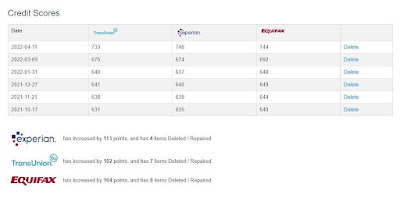


These are REAL results!


Our custom credit disputes leverage the consumer protection laws and the credit bureaus’ automated codes to help remove or correct any unverifiable items.

As a client, we dispute accounts with the bureaus and creditors on your behalf. Using our years of experience, we utilize the tools you need to move your case forward and the results you are looking for.

You too can improve your creditworthiness.

Read More About Credit Worthiness Here
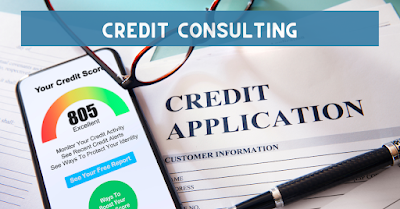


Are you ready to make a big purchase but want to take a deeper look into your credit first? You're not alone.

Our credit consulting services play a huge role in separating CRI from others. Our ongoing credit consultation service helps you ensure that you’re making the best choices.

We want you to know that you can count on the information we provide. Call us today for more information.


Join Our Workshop


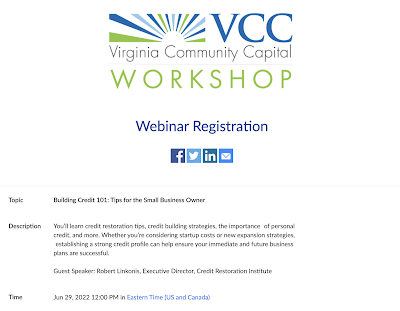
Topic
Building Credit 101: Tips for the Small Business Owner

Description
You’ll learn credit restoration tips, credit building strategies, the importance of personal credit, and more. Whether you’re considering startup costs or new expansion strategies, establishing a strong credit profile can help ensure your immediate and future business plans are successful.

Guest Speaker: Robert Linkonis, Executive Director, Credit Restoration Institute

Time: Jun 29, 2022 12:00 PM in Eastern Time (US and Canada)

Click here to register

Continued Mortgage Trends


According to Freddie Mac, mortgage rates continue to fall but they still remain above 5% fueling an ongoing problem for buyers trying to break into the market.

In a recent article from CNN they reported on numbers from Freddie Mac showing that at the end of May 2021, a buyer who put 20% down on a $375,500 home, financed the rest with a 30-year, fixed-rate mortgage with an average interest rate of 2.95% would have a $1,258 monthly mortgage payment that included principal and interest.

Today, if a homeowner bought the house at the same price with an average rate of 5.10% they would pay $1,631 a month in principal and interest. That is $373 more each month and $134,140 more in cumulative interest payments over the life of the loan , according to numbers from Freddie Mac. According to CNN "For many people, that several hundred dollars in additional payment a month is the difference between deciding whether to buy a home or rent."

Read the full article here



Wishing all the awesome father's out there a
Happy Father's Day!



Give us a call today to start your credit repair journey!
Mon-Fri 9 a.m. - 5 p.m. (804) 823-9601 | (800) 648-5157
mail@creditrestorationinstitute.com

Fill out this easy form on our website

Friday, March 31, 2017

Another Scam Debt Collection Email

Another forwarded email from one of my clients. From the United States of Federal Managment?? - Lol. It is a shame because I know people fall for emails like this.

In a previous post, I replied back to one of these offering to settle the debt in full for $50.00. Someone immediately replied back countering at $100.00 and instructed me to buy an Amazon.com gift card. Then they instructed to email back the gift card confirmation code so that they can provide assurance that the account will be "closed out". What an absolute scam.


Sent: Friday, March 31, 2017 11:00:21 AM
Subject: Fwd: WAGE GARNISHMENT NOTICE

Please advise

Sent from my iPhone

Begin forwarded message:
From: "DEBT COLLECTION AGENCY" <loans.online1553@gmail.com>
Date: March 31, 2017 at 10:39:24 AM EDT
To: < >
Subject: WAGE GARNISHMENT NOTICE

                    GARNISHMENT NOTIFICATION AND ARREST NOTICE


CASE FILE #: DC-023964S


Date: March 31TH 2017

One Time Settlement Amount: $623.27


Dear: (misspelled name),


This letter is to notify you that we would precede your matter for Garnishment on your wages. This means that someone you owe money would be awarded a judgment from the court for payment of the debt. The court can order your employer to deduct 25-30%  percent of your disposable earnings and make payment to the court on your behalf to recover your debt.


Why am I receiving this notice?


The United States, or a State Debt support enforcement agency, certifying its right to garnish your Federal benefits shall attach or include with a garnishment order the following Notice; Garnish wages owed to a Debtor after Small Claims Court would make order that you owe money. On FEBRUARY 23th 2017,  we received a garnishment order from a court to [freeze/remove] funds in your account. The amount of the garnishment order was for $1423.13. We are sending you this notice to let you know what we have done in response to the garnishment order. You can contact your creditor for the settlement amount.


What is garnishment?

Garnishment is a legal process that allows a creditor to remove funds from your [bank]/[credit union] account to satisfy a debt that you have not paid. In other words, if you owe money to a person or company, they can obtain a court order directing your bank to take money out of your account to pay off your debt. If this happens, you cannot use that money in your account. 
  
The following applies to you:

Before you are arrested: - If you pay in full, or make a part-payment before you are arrested, the warrant will be recalled and amended. However, it will be immediately re-issued if the debt is not paid in full.
When you know a warrant has been issued, you should E-mail us on to discuss your options.
After you are arrested: - Once the warrant has been served, your only options are to serve the time in prison or pay the debt (plus costs) in full at the Courthouse.

IF YOU WANT TO RESOLVE THIS MATTER THAN IMMEDIATELY CONTACT US THROUGH EMAIL BETWEEN WORKING HOURS AND SETTLE THIS MATTER.


Sincerely,

LOGAN BROWN

Sr. Investigation Officer

Working Hours: 10.00 A.M to 6.00 P.M CST (Mon-Fri)

                           10.00 A.M to 1.00 P.M CST (Sat) 

 USTreasurylogo01.png

UNITED STATES OF FEDERAL MANAGMENT

Copyright © 2006 ACS | Privacy | Terms of use

ACELOAN.ONLINE

--------------------------------------------------------------------------------------------------------------------------------------------------------------------------------------

Confidentiality Statement & Notice: This email is covered by the Electronic Communications Privacy Act, 18 U.S.C. 2510-2521 and intended only for the use of the individual or entity to which it is addressed. Any review, re-transmission, dissemination to unauthorized persons or other use of the original message and any attachments is strictly prohibited. If you received this electronic transmission in error, please reply to the above-referenced sender about the error and permanently delete this message.

Thank You for Co-operation.


Related Posts: Debt Collection Bottom Feeder Text Messages


Visit the Credit Restoration Associates Website  
Back to the CRA blog homepage:Credit Repair Va:
CRA Resources:
Credit Repair:
About CRA:

Friday, March 10, 2017

Debt Collection Bottom Feeder Text Messages

Here is a cell phone screen shot sent in by one of my clients. The ex significant other took out some internet payday loans in my client's name.

Eventually, the defaulted loans get sold to "bottom feeders" who will never stop the harassment. Keep in mind, that the FDCPA and the Telemarketing Sales Rule regulates this kind of behavior, but we still have to find them to serve a lawsuit.


It is hard to track down these scammers when they use Google Voice or VOIP phone numbers to call and text from.

The take away from this, is that you absolutely have nothing to be afraid of if someone is 1. texting you and 2. if English is definitely not their primary language.

It is kind of funny actually. If this is happening to you, try to laugh it off, and DO NOT return the text.

Credit Repair Franchise Opportunity: https://www.crafranchise.com

Visit the Credit Restoration Associates Website  
Back to the CRA blog homepage:Credit Repair Va:
CRA Resources:
Credit Repair:
About CRA:

Wednesday, March 8, 2017

Scam Debt Collector Bottom Feeders

A current client forwarded this email to me. First  a scammer will always use a non-traceable email address such as Gmail or Hotmail.

For fun, see how many grammatical, spelling and format errors you can find in this message as well as completely inaccurate information. Lol.


 Sent from my iPhone

Begin forwarded message:
From: National Collection Bureau <nationalcollection.usa@gmail.com>
Date: March 8, 2017 at 1:55:53 PM EST
To: National Collection Bureau <nationalcollection.usa@gmail.com>
Subject: Final Notification_Lawsuit Case File#JMD-01147791-SC
FINAL NOTICE FOR FAIR ACTION
(Fair Debt Collection Act-811[15 USC 1692i])
Case File#JMD-01147791-SC 

Last Date to File Lawsuit- March 10th 2017.
Cost of the Lawsuit-5825.35
Courthouse Address-NYC Civil Court(89-17 Sutphin Blvd, New York, NY 10038).
Legal Charges-Section 19(A), Clause 21(US).
Case Format- Fair Debt Collection Act 811 (FC/SC)
Due Amount-$556.00

Dear Debtor,

This is to notify you and requires your immediate attention.
We are going to file a lawsuit in next 24 hours at  NYC Civil Court (89-17 Sutphin Blvd, New York, NY 10038).against your Name and SSN. After giving several notifications we did not received any response from your side. We will consider that you are ignoring this matter and you want to dispute. We are in a process to inform the Social Security Administration & major Credit Bureaus as well.
If we do not hear from you today, we will be compelled to seek legal representation in the Court House. We reserve the right to commence litigation for intent to commit wire fraud under the pretense of refusing to repay a debt committed to, by use of the Internet. In addition we reserve the right to seek recovery for the balance due, as well as legal fees and any court cost incurred. 
Note:If we don't get any response from your side, we shall have no alternative but to take action through the local County Courthouse to recover the amount due together with court costs and legal fees including all taxes which cost approximately $5825.35. 
Note: The Legal Charges Section 19(A), Clause 21(US) is against you and if you ignore this case then our legal department will take immediate action you.
If we receive the remaining payment from you thereafter we will provide you full and final receipt stating that your case file is closed permanently with remaining zero balance. Don't take this matters lightly otherwise once the case file is downloaded thereafter we won't be able to help you out.
If you fail to respond us the Charges will be pressed against the name are: 
1. Violation of federal banking regulation act 1983 (C)
2. Collateral check fraud
3. Theft by deception (ACC ACT 21A) 
Which carries a maximum sentence of 3 years of prison and a fine up to $5825.35 !
YOU CAN APPLY FOR AN OUT OF COURT RESOLVE OPTION (OOCR): All you do is email us back for taking care of this matter outside the court house. 
PS. If you fail to respond within 24 hours this Legal Action will be activated. You will be Entitle for an OOCR, so please EMAIL us back ASAP. 
By requesting an offer in compromise, but if you are failed to do that then we shall start the process of pressing those charges against you. 
To resolve this issue ASAP,
Kindly emails us immediately.
Thanks&Regards,
ACS Incorporation.

My response:

I emailed back and offered to "settle this alleged debt in full" for $50.00. They immediately countered at $100.00 and asked that I send an account number for a $100 pre-paid Amazon.com gift card back to this email address. The logic was "we don't want your banking information, we understand that it might make you feel uncomfortable giving your banking information to a collection agency. Go to  https://www.amazon.com/gift-cards, (affiliate info removed) and purchase a card for $100. Then gift it to us at this email address and send us the confirmation from Amazon". What a complete scam.

The shame is that people probably fall for it.

Visit the Credit Restoration Associates Website  
Back to the CRA blog homepage:Credit Repair Va:
CRA Resources:
Credit Repair:
About CRA:

Saturday, September 6, 2014

How Closing a Credit Card Affects Your Credit Report and Score

By credit expert: John Ulzheimer:
http://www.johnulzheimer.com


If you follow credit scoring to any extent, you're probably familiar with the concept that closing credit card accounts can potentially lower your credit scores.

The idea that closing a credit card will always have a negative impact upon a person’s credit scores is untrue. There are some scenarios under which closing a credit card is completely benign. Let’s explore the issue in depth.

The Never Ending Myth:

The idea that closing a credit card automatically lowers a consumer’s credit scores due to the fact that the age of the account will no longer be counted is false. FICO® and VantageScore® credit scores still consider the age of closed credit card accounts when determining a consumer’s credit scores. In fact, closed credit card accounts even continue to age as time passes. Keep in mind, however, that closed accounts will eventually be removed from your credit reports 10 years after the closing date and at that time you will lose the value of the age of the card.

Why Closing a card can actually hurt scores:

Credit scoring models are very concerned with a consumer’s revolving utilization (or debt-to-limit) ratio. Revolving utilization is a fancy way to describe the relationship between the balances on all of a consumer’s credit card accounts with the credit limits on his open credit card accounts. Closing a credit card can cause your utilization ratio to go up and, therefore, your scores to go down.

If Joe Smith has 3 credit cards, each with a limit of $2,000 ($6,000 total available credit) and a balance of $1,000 per card ($3,000 total debt) then his aggregate utilization ratio is 50% ($3,000/$6,000 = .50). If he were to close one of the cards his total available credit would be reduced to $4,000 while his total debt remains at $3,000.

Closing that one card just shot Joe Smith’s utilization ratio up from 50% to 75% ($3,000/$4,000 = .75) within the space of a single phone call. This is the one reason your scores would go down because of you closing a credit card account.


Closing Cards Strategically:

Smart consumers know that carrying credit card debt from month to month is a bad idea. Revolving a balance on credit cards is not only bad for a consumer’s credit scores, it is a poor financial decision as well because of expensive interest. The best way to use credit cards is to spend only as much as you can afford to pay off, in full, by the due date. But, if you are resolved in your decision that credit cards are no longer for you, there are a few smart ways you can do this.

Scenario #1

If a consumer has no credit card debt, ever, then he can close a credit card without any impact to his credit scores. Closing a credit card with a high annual fee, for example, might actually be a wise decision. Remember, if the consumer has a $0 balance on his credit card across all of his accounts then his utilization ratio is 0%.

Scenario #2

If a consumer has several credit cards with high limits and wants to close a credit card with a much lower limit, then doing so will probably have little-to-no impact on the consumer’s credit scores, depending on how much debt he’s carrying on other cards. However, unless the card with the low limit has a high annual fee or perhaps a high interest rate, it’s probably a better idea to keep the account open.

Scenario #3

Consider not closing any of your credit cards, ever. Unless your card has an annual fee, it costs you nothing to keep it open. If it has a high interest rate, just don’t use it or use it for minimal purchases, like a tank of gas, so that it can be paid in full easily by the due date. This way you won’t ever have to worry about the potential damage of closing credit cards.  Furthermore, having several different cards can actually come in handy; learn more about the value of carrying multiple credit cards.


Learn more from credit expert John Ulzheimer at: http://www.johnulzheimer.com


NEXT POST: What to do when you get a 1099c for an old debt: 


Wednesday, December 26, 2012

Debt Collection Complaints Rise

 WASHINGTON, Dec, 20(UPI) — The U.S. Federal Trade Commission said complaints about aggressive debt collectors had jumped 73 percent since 2008, a symptom of a sluggish economy.

“We’ve seen a high level of complaints, and I think some of it is collectors realizing in hard times they may have to press that much harder to get someone to pay,” the agency’s chief debt collection lawyer Tom Pahl said.

“And a lot of them are pressing,” he said.

The agency handled 180,928 complaints about debt collection agencies in 2011, making it the No. 1 industry it terms of complaints filed, the Los Angeles Times reported Monday.

Roughly half of the complaints concern abusive phone calls. But complaints also involve legal tactics undertaken by debt collectors.

 Many of those complains involve debt collection agencies not checking facts on cases they pursue.
“These folks are very aggressive,” said California state Sen. Jose Luis Correa, D-Santa Ana, who found his wages garnisheed over a debt of $4,329 allegedly owed to Sears.

Correa contends that the debt collection agency had targeted the wrong man. Furthermore, he says he was never served court papers concerning any lawsuit filed against him. The court, however, ruled in favor of the debt collection company out of default, which it is allowed to do if a defendant does not show up for the trial.

“I always pay my bills on time. Then to have somebody garnish my wages, I thought was pretty astounding,” said Correa, who had the garnishment stopped and also found the debt belonged to a different Luis Correa.

In another incident, Katie Brown of Piqua, Ohio, got a phone call from a man who said he was from a legal aid service she had called to get help regarding harassing phone calls.

But after freely divulging personal information, the man said, “‘Now let me tell you who I am,’” she said. He then revealed that he was the debt collector holding her debt.

She is suing the International Asset Group Inc. of Amherst, N.Y., accusing them of false representation and debt collection harassment.


CRA's take on this: GOOD! If collection agencies violate the Fair Debt Collection Practices Act, then they deserve to get sued! In my opinion, debt collectors are no different from evil telemarketers. They are all on big commission pay plans and whose only goal is to extract money from the people that they are collecting from.

They will get judgements on people without "irrefutable" proof that the debt actually belongs to them, not someone with the same name.They will put accounts in the "unpaid collections" column on peoples credit reports with absolutely no proof of the legitimacy of the debt.

CRA is a total credit improvement company - Not just a credit repair company.

If the collection account is on a credit report legitimately, then we need to deal with it. A client in our program will have access to negotiators with years of experience in settling debts. Many times a debt is settled after obtaining leverage over the collection agency by their repeated violations of the FDCPA.

We also have access to a legal team who is paid when they win a case - not by the client.

If collection agencies are calling and leaving voice mail messages, than those messages might contain FDCPA violations. Sometimes, this is all we need to burn a DVD of the offending voice mail message and sue them.

Remember, there is never a charge for a consultation with a credit expert. Call us today! 800-648-5157 


Visit the Credit Restoration Associates Website 

Back to the CRA blog homepage:
Credit Repair Va:
CRA Resources:
Credit Repair:
About CRA: 

 NEXT POST:  FCRA Lawsuits Way up. Why?

Good Article: The Credit Score That You See is NOT the Same as Lenders See

Thursday, May 31, 2012

Can Bad Credit Ruin Your Job Search?


Have you ever applied for a job and wondered if your bad credit would affect the outcome? Pre-employment credit checks aren't that uncommon these days. 

According to a survey released by the Society for Human Resource Management in 2010, 13 percent of the companies surveyed check the credit reports of all candidates and 47 percent check some candidates.


Should you be worried if you have a poor credit history?

Employment-related credit checks are legal in most states, but there are limits to what employers can see and how they can use your credit information. Here's what you need to know about credit reports and your job search.


Contrary to popular belief, employers can only see your credit report not your credit score. Credit reporting agencies do not provide your credit score to employers as part of the pre-employment screening process. "Credit scores are sold along with credit reports, but they are not the same thing," says John Ulzheimer, the president of consumer education at SmartCredit.com. 

Your credit report offers an overview of how much debt you have and whether you pay it on time, while your score is a number that represents your credit risk, usually between 300 and 850, based on this information. Under the Fair and Accurate Credit Transactions Act, all Americans are entitled to a free credit report, but not a free credit score, from each of the three major credit reporting agencies once every 12 months.


According to Mike Aitken, director of government affairs for SHRM, employers look at long-term trends, not whether you missed a loan payment or forgot to pay your Visa bill a few times. "They're looking to see if the person can handle their personal finances," he says. "In particular, they care about when things go into default or judgment." As Ulzheimer says, things get messy when collectors start calling the office or trying to garnish wages, so employers want to avoid those situations.


Before an employer can view your credit report, they need your permission in writing. That's a requirement under the Fair Credit Reporting Act. Once you grant permission, Ulzheimer says employers generally buy that information, along with a criminal background check and other information, from third-party screening companies. Aitken say it can cost employers upward of $200 to run background checks on each applicant, so they'll usually wait until they're almost ready to make a job offer. And unlike other credit inquiries, employment inquiries do not impact your credit score.


You could deny a prospective employer permission to view your credit report, but the company might not hire you without this information. Under the Fair Credit Reporting Act, before the employer makes an adverse decision based on your credit report, such as denying your job application, the employer must tell you and provide a copy of the credit report. They are not required to give you the opportunity to explain your bad credit, but SHRM's study found that 65 percent of employers say they give candidates the opportunity to explain the contents of their credit report before making a hiring decision. If you have serious credit issues, Gail Cunningham, vice president of public relations for the National Foundation for Credit Counseling in Washington, D.C., suggests being upfront about it. "I would be truthful and say succinctly what happened that caused your financial hiccup and how you intend to pull out of it," she says, adding that consumers can contact credit bureaus and electronically submit a 100-word explanation to accompany their credit reports.


Some states have or are getting stricter on pre-employment credit checks. An Illinois law took effect in January that outlaws employment-related credit checks except in a few very specific instances. Hawaii, Oregon and Washington already have laws limiting this practice. And 25 states have bills pending in the 2011 legislative session, according to the National Conference of State Legislatures. "In these economic times, with millions of people having a foreclosure or bankruptcy on their record, employers are going to have to rethink the relevance of a credit report with respect to a job applicant," says Cunningham.


Aikten knows of a few cases where a company chose not to make a job offer based on the findings of a credit check. In one case, a company discovered that a prospective CFO had tens of thousands dollars in gambling debt, so they felt a fiduciary responsibility to find someone else. But he stresses that credit reports are rarely the deciding factor. "Just because somebody has a bad credit report doesn't mean they'll embezzle or steal," says Aitken, "but it is a factor along with work experience, certification requirements and character references. It's one piece of the pie."


If you think you're home free once you land a job, think again.

"Ask anybody in the military who's lost their clearance," says Ulzheimer. "It's not terribly common, but you can lose your security clearance if you start to have collections issues." According to the 2010 SHRM survey, almost 20 percent of employers conduct ongoing credit and/or criminal background checks post-hire on employees working certain jobs, such as those with access to confidential information, and 5 percent do them for all employees. Some firms perform credit checks before granting a promotion or a change in status and some do so annually.

All the more reason to continually monitor your credit report and work to clear up any issues, as corrections won't happen overnight. Just as you shouldn't wait until you're applying for a car loan or a mortgage to think about your credit report, you shouldn't wait until you're asked to share your credit report with potential employers.

"People say 'I don't care what my credit report looks like, because I'm not applying for a loan,' but what if you lose your job tomorrow?" asks Ulzheimer. "You always have to be worried (about) what's on your credit report."


John Ulzheimer is the President of Consumer Education at SmartCredit.com, the credit blogger for Mint.com, and a contributor for the National Foundation for Credit Counseling. He is an expert on credit reporting, credit scoring and identity theft. Formerly of FICO, Equifax and Credit.com, John is the only recognized credit expert who actually comes from the credit industry. The opinions expressed in his articles are his and not of Mint.com or Intuit. Follow John on Twitter.


Next Post: Can your "Employment Credit Score" Hurt your chances on getting a job?


Back to the CRA blog homepage:
Credit Repair Va:
CRA Resources:
Credit Repair:
About CRA:

Sunday, January 8, 2012

Reducing Debt in 2012

Trimming the fat may be the most popular New Year’s resolution out there, but trimming your debt is not far behind for a lot of people.

“Getting out of debt is more strategic than simply writing a check to your creditors,” said John Ulzheimer , President of Consumer Education with SmartCredit.com and contributor at the National Foundation for Credit Counseling.
 
“You can save hundreds or thousands of dollars by prioritizing your debts,” he added. “You can also get the benefit of a higher credit score by being smart about what you pay first.”
Ulzheimer recommends these ground rules for those who are serious about reducing their debt in 2012:

REMEMBER THE BASICS
Make sure you make your minimum payments to ALL of your creditors… on time… each month.  If you can pay more, you should.  But skipping a payment or paying late is a big no-no.

RETAILER CARDS FIRST
Choose your retailer credit cards (i.e. Macy’s, Gap, Nordstrom, etc.) as the ones you pay off first.  Be aggressive.  On average, the interest rate on these cards is about 10-12-percentage points higher than general use credit cards like Visa, MasterCard, and Discover.
“You should be able to knock them out faster because the balances on these cards are generally lower than general use cards,” said Ulzheimer.
“And by paying off retail cards, you’ll also improve your credit score because you’ve lowered the number of cards with a balance and the infamous “debt utilization” percentage – both of which are very important in your FICO scores.”

SOCK LESS AWAY…FOR NOW
Ulzheimer said you may also want to stop contributing to your 401K and IRA until you’ve paid off your credit card debt.  The amount you are earning in “gain” is probably not as much as you are paying in interest.
“That means you’re losing money each month you have credit card debt.” Said Ulzheimer.

INSTALLMENT DEBT VS. CREDIT CARD DEBT
Don’t put installment debt in front of credit card debt.  Rates on cars, houses, student loans are much lower than those on plastic.  And you are probably getting tax advantages on your mortgage and student loans.

KNOW WHEN TO SETTLE
If your debt is in default or being handled by a collection agency, then you need to offer what’s referred to as a “settlement.”

“I never advise this unless you’re dealing with collection agencies,” said Ulzheimer.
“They normally acquire the debt for pennies on the dollar so your former $1,000 debt isn’t really what you owe the collector, but that’s what they’re going to try to collect,” he explained.  “Start your offer at 10% of what they say you owe and work with them until a satisfactory settlement has been reached.


NEXT POST: We Like NACA


Back to the CRA blog homepage:
Credit Repair Va:
CRA Resources:
Credit Repair:
About CRA:

Thursday, October 20, 2011

Girl Scouts Add New "Good Credit" And "Finance" Badges

By Ben Popken on October 20, 2011 2:00 PM (Girl Scouts USA)

The Girl Scouts just finished their first redesign of their badges in 25 years, adding several new ones that will appeal to Consumerist readers.

There's now a "Good Credit," "Money Manager," "Budgeting," and a "Financing My Future" badge. But It's not just the consumer credit side that's getting represented, but also the other side of business. There's a new "Customer Loyalty" badge in the cookie sequence, as well as Meet My Customers and Business Plan badge.

For an Ambassador level scout in the 11th or 12th grade to earn the "Good Credit" badge, for instance, one of the tasks to accomplish is meeting a loan officer at a bank to discuss how one becomes a good candidate for a loan and what are the duties of a responsible borrower. After they've learned about credit reports and credit scores, the girls must make a pledge as to how they will use credit in their life.

A Girl Scouts USA spokesperson said that the badges add up to a program of financial literacy education that schools aren't providing.


NEXT POST: Six Ways To Beat Late Fees - That EVERYBODY Needs To Know


VISIT THE CREDIT RESTORATION ASSOCIATES WEBSITE:


Back to the CRA blog homepage:
Credit Repair Va:
CRA Resources:
Credit Repair:
About CRA:

Tuesday, April 19, 2011

Remodel Your Credit Before You Begin Renovating Your Home


Improved resale value, more space or better use of the space you have, and a brand-new room to enjoy... It may be hard to imagine a downside to renovating a kitchen or bathroom. But you could discover a dark side to remodeling - deciding to finance the project by borrowing the money before checking your credit.

With the real estate market still limping along in many areas of the country, you may decide that it makes more sense to improve the home you have, rather than move into a new one. And you wouldn't be alone in thinking that way. Harvard's Joint Center for Housing Studies predicts Americans will spend nearly $141 billion on remodeling in the first half of 2011.

The economy may be driving the renovation trend another way, as well. Interest rates are low - for those who can qualify for them, with good credit.

So it makes sense to know what's on your credit report and what your credit score is before you make plans to renovate your kitchen, bath or any other room in the house.


If you plan to use credit to finance a renovation project (and few of us can afford to pay cash these days), be proactive and understand your credit with these simple steps:

1. Find out where you stand.

Although it's fairly easy to obtain a free credit report and score online, many Americans aren't confident about where they stand in terms of credit. Your first step toward making your renovation dreams a reality is to find out how potential lenders will perceive your credit worthiness.

Reviewing your credit score through Websites like Transunion's TrueCredit can help you get a clear picture of how potential creditors might perceive your use of credit. Membership in the site's credit monitoring membership can also help you keep on top of your credit by sending you e-mail alerts when something changes on your credit report.


* Take action - and keep at it.

If you find errors on your credit report, contact the major bureaus and dispute the errors. It's also a good idea to monitor your report regularly, throughout the year, as identity theft or instances of fraud could show up on it, alerting you quickly to a situation you otherwise might not have discovered for months.

Your credit score is a fluid number, and it can change throughout the year as you improve your payment records, miss or delay a payment, and open or close lines of credit. Many factors go into calculating your credit score, but generally bureaus take into account how reliably you pay bills on time, the total amount you owe in secured and unsecured debt, and how much unused credit you have available.

* Get an idea of the impact.

Knowing your credit score not only better empowers you to bargain for the optimum loan terms, it can also help you understand how that new renovation loan will affect your score and report.

Whether you're remodeling just one room in a house or the entire house, funding the project can affect your finances, including your credit score. If you make sure you understand - and have a handle on - your credit before undertaking a project, you'll be more likely to reap the rewards, and avoid the downside, of home renovation.


Reprinted by permission from the Richmond Times Dispatch - published print edition Sat April 16, 2011.


Get A Free Transunion Credit Score through TrueCredit HERE

True Credit


Next Post: 8 Secret Credit Scores (you might not have even heard about).


VISIT THE CREDIT RESTORATION ASSOCIATES WEBSITE:


Back to the CRA blog homepage:
Credit Repair Va:
CRA Resources:
Credit Repair:
About CRA:

Thursday, February 17, 2011

Rewriting the Rules of Credit

In his new book, A Call for Judgment: Sensible Finance for a Dynamic Economy, economist and Tufts University professor Amar Bhidé laments a banking system that bases decisions on complex algorithms rather than good old-fashioned loan reviews, a practice that has greatly choked off financing to small business.

Auto Finance Insider interview excerpts:

Lending used to be a subjective matter. Why did we wind up with a system of stringent rules?

First, there was an ethos that developed in academia that said that all risks can be quantified. What economists did was say the stuff that we cannot quantify is really on the margin. And what's essential to risk, we can pretend to reduce to one or two numbers. Once you do that, then you can create a machine. If you're required to think of risk in a broad, holistic kind of way, it's much more time-consuming.

Implicitly and explicitly, the government embraced this view of risk. Almost unwittingly, [Fannie Mae and Freddie Mac] created the largest mechanistic model of lending in the world simply by saying we will underwrite the risk of mortgages if they meet XYZ criteria. If you followed the model for a loan, the government would take it.

The interesting part is that not all lending can be equally mechanized and scaled up. And therein lies the rub. It means that if I'm a bank, and I want to expand, I'm going to favor the activity where I can put pedal to metal fastest.

And small-business lending does not fit into that mold.

Correct. It was and remains an activity that requires a banker to go and talk to the borrower. Analysts can pretend that all housing loans are the same, but with small business, the pretending completely defies belief. So small business gets the short end of the stick.

What about the bank bailout? Why did so little money reach small businesses?

The way to get more credit into the hands of the small-business owners has been long impaired, and for the money to reach the people who need it, you need more channels. Small-business lending requires a mechanism that frankly will take a long time to rebuild.

How can the U.S. revive small-business lending?

The government should demand that any depository institution whose liabilities are ultimately guaranteed by the taxpayer make its loans prudently—where a banker and an examiner understand the risks and where each loan is made with a case-by-case examination of the risk in the bank. Small-business lending will remain risky. But there's a difference between a risk taken after a bank has obtained a deep understanding of the situation and a risk taken based on algorithms or rules that do not in fact make a lending decision safer.

What role should regulation play?

I think one of the great strengths of America is people's willingness to borrow and consume in the expectation of a better tomorrow. That is one of the things that distinguishes America from Europe. I think it's fantastic that three million iPads have been sold even in a recession. But that primal urge needs to have a brake applied to it sometimes and the brakes used to be provided by the banking system. Something healthy and useful was taken to extremes. It becomes insane. It's like, protein is good for you so you go on an all protein diet.

For regulators, instead of continuously experimenting with things like quantitative easing, why not pay attention to the things we know are bad?

But there's no hard and fast rule that says more regulation is good or more regulation is bad. You have to look at the facts of the case. And the facts said with banks that self-policing did not work. We ought to examine the brakes.

I agree wholeheartedly!


You should buy this book - it is Awesome:


VISIT THE CREDIT RESTORATION ASSOCIATES WEBSITE:


Back to the CRA blog homepage:
Credit Repair Va:
CRA Resources:
Credit Repair:
About CRA:

Thursday, August 26, 2010

What the Credit CARD Act (Credit Card Accountability, Responsibility and Disclosure Act of 2009) Means For You


Restrictions on rates and fees:

This new legislation will put restrictions on credit card companies from increasing rates and fees on existing balances.

If your credit card company raises your interest rates, the newly raised rate will not apply to your preexisting balance, just on new charges.

Avoid getting charged fees by always paying your credit card bills on time, even if you’re only paying the minimum monthly payment or balance.

Keeping the balance below your total credit limit will also help lenders view you more favorably (try to stay under 33% of your total limit).


No immediate changes:

The new law won’t go into effect for nine months.

Meanwhile, banks may still raise interest rates on your existing balances. A smart move now would be to start or continue monitoring your credit so you’re aware of balances and debt as well as fees, rates and interest charges.


Curbing of caps and fees:


The new legislation doesn’t completely cap credit card fees and interest rates.

For example, the regulation doesn’t set limits on the charges that may come with your monthly statement. It does, however, ban late fees if the issuers had delayed crediting the payment.

It also requires banks to give consumers at least 21 days notice when sending bills.

You’ll have more time between a bill’s receipt and its due date, but make sure you stay on top of your bills to avoid late charges.


No more rate raise surprises:


Credit card companies must now alert customers 45 days before interest rate increases.

They’re also required to give notice of significant changes to a card’s terms, so that companies can’t completely alter rewards programs without warning on customers who have been participating for years in a certain rewards program.

Be sure you understand a credit card’s terms before you agree to anything — read all the fine print.


Harder to get credit for some:

Credit card companies will be required, under the legislation, to consider a consumer's ability to pay when issuing credit cards, which could make it harder for some to get credit (but could also protect them from getting in over their heads). It also limits how issuers can offer credit to those under 21 without verification of their ability to pay or parents' permission.

It makes great financial sense to keep aware of how lenders view you as a borrower, so start or continue staying on top of your credit report!

Good stuff!


VISIT THE CREDIT RESTORATION ASSOCIATES WEBSITE:


Back to the CRA blog homepage:
Credit Repair Va:
CRA Resources:
Credit Repair:
About CRA: